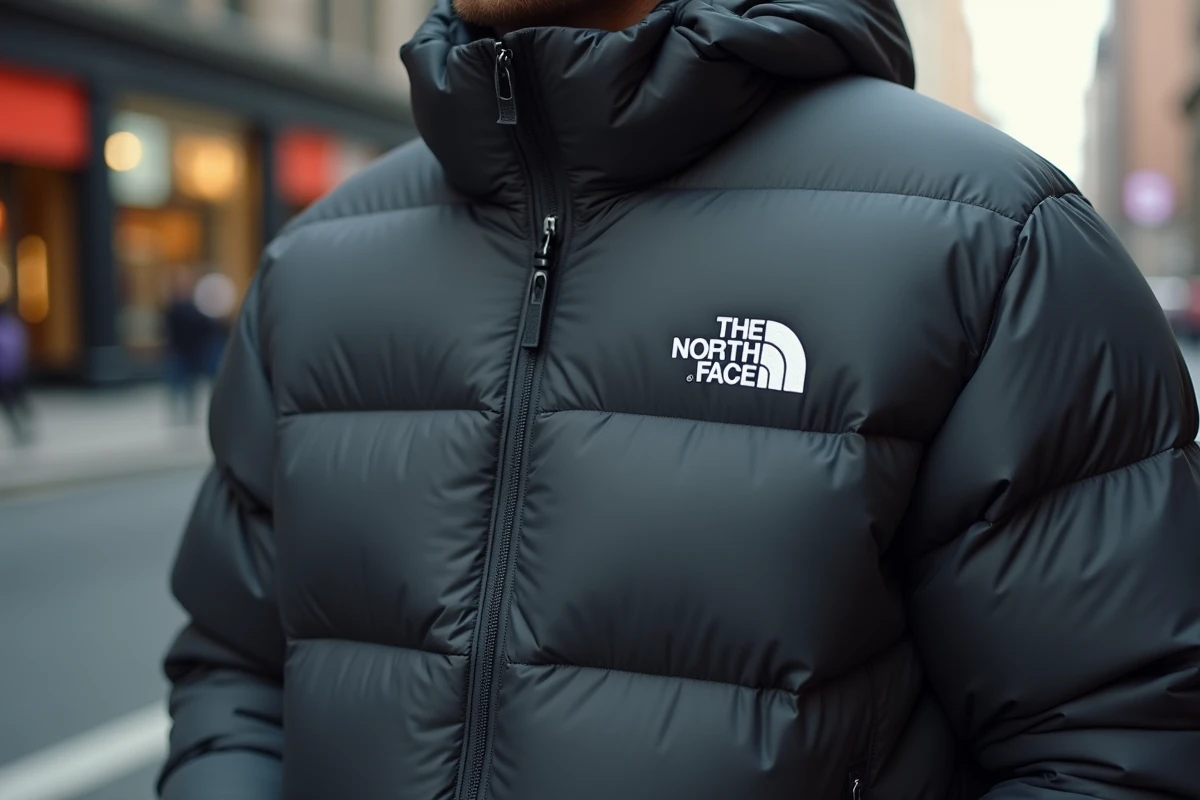
A The North Face down jacket often costs two to three times more than a comparable model from a generalist retailer. This price, displayed without hesitation, fuels discussions on forums and in the streets. The reasons behind these prices are tied to both industrial choices and a well-established commercial mechanism, and both deserve to be examined separately.
Proprietary technologies and the premiumization of urban collections
The first price factor lies in the materials. The North Face has gradually generalized technologies developed for mountaineering or trail running across its urban ranges. FutureLight (waterproof and breathable membrane), ThermoBall (synthetic insulation that mimics down), and high-end versions of Gore-Tex can now be found on jackets worn in the city, not just in the mountains.
A few years ago, an urban parka from the brand used standard technical materials. Today, the same type of product incorporates licensed membranes or insulations whose manufacturing costs are significantly higher. The technical premiumization drives average prices up, even for pieces that their buyers will never wear above 2,000 meters in altitude.
This strategy creates a deliberate blur between the expedition range and the lifestyle range. The consumer partly pays for a performance they do not need, but which contributes to the perceived quality of the product. This can be seen as a form of excess, or a choice for durability: a technical fabric generally withstands wear and tear better than a basic fabric.
The available data do not allow for a clear distinction between marketing overcost and actual longevity gain, as The North Face does not publish internal comparisons on lifespan by range. To understand why The North Face is expensive according to Free Sport’s analysis, one must also look at the quality of finishes and recent environmental certifications.

Collaborations and halo effect on catalog prices
The North Face is multiplying collaborations with fashion houses and streetwear brands. These capsule collections, produced in limited quantities, reach very high prices and sell out within hours. Their function is not to generate massive revenue, but to serve as an image laboratory and indirect justification for prices on mainstream collections.
The mechanism is simple. A collaboration generates media coverage and rarity. This perceived rarity uplifts the entire brand. A teenager who buys a classic Nuptse jacket does not wear the designer piece, but benefits from the associated prestige. This is what retail analysts call the halo effect of rarity and hype.
The phenomenon is also measurable in the second-hand market. Pieces from collaborations resell above their initial price, reinforcing the idea that The North Face product “retains its value.” This perception in turn justifies a higher new price, in a self-sustaining loop.
Anchor pricing and clearance strategy in France
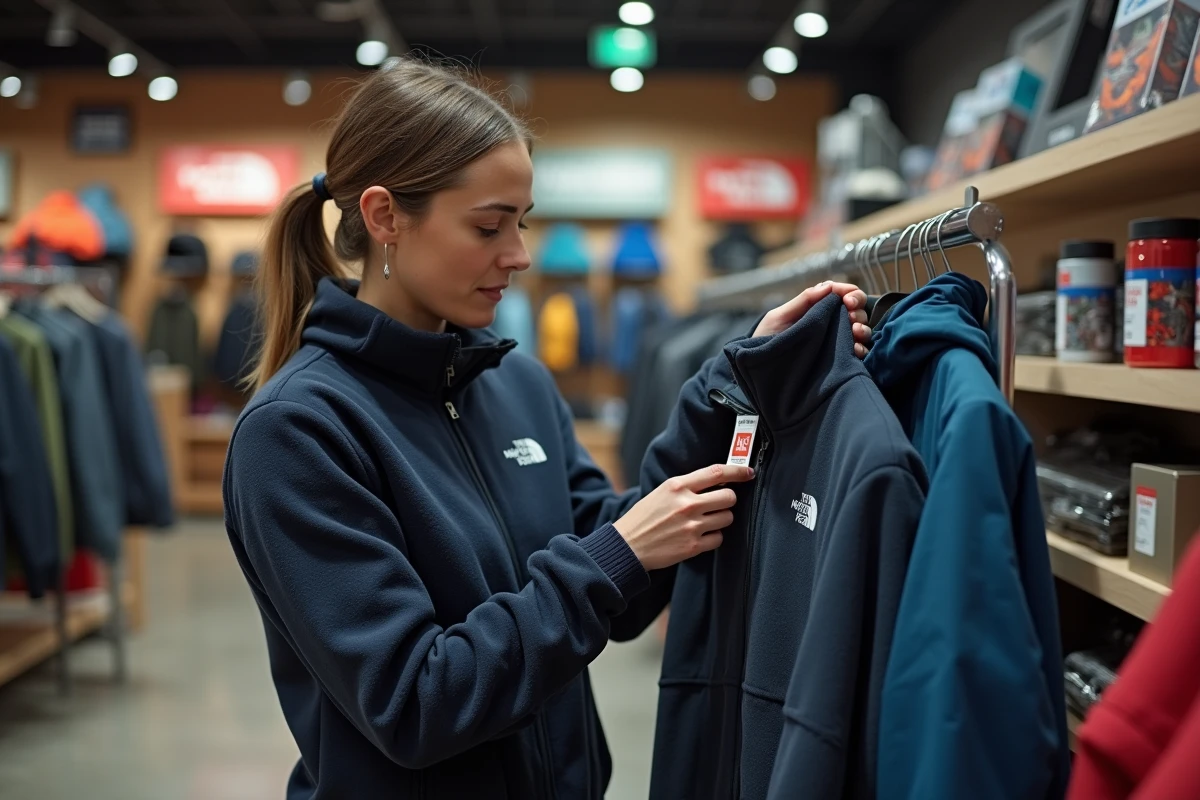
The price displayed on the label does not always correspond to the actual price paid. Several retail analysts point out that The North Face employs a deliberate anchor pricing strategy: the recommended retail prices remain high, but the brand multiplies promotional channels.
- Regular private sales on specialized platforms, sometimes with discounts exceeding one-third of the initial price
- Physical and online outlets where past collections are offered at reduced prices year-round
- Clearances through major French retailers, especially during legal sales periods
This dual mechanism allows the brand to maintain a premium positioning while selling volumes. The consumer who buys at full price finances the brand image. Those who wait for promotions access the product at a price closer to its actual production value. Both coexist, and the brand needs both.
B2B merchandising and perceived value outside retail
A rarely mentioned sales channel also contributes to maintaining high prices: the corporate gifts and professional merchandising market. The North Face is one of the most used outdoor brands for high-end promotional items, with bags or jackets featuring logos distributed at events or given to strategic clients.
Agencies specializing in promotional items explain that The North Face is chosen because recipients know the brand and trust it. The perceived value justifies a budget significantly higher than generic products. This B2B market supports high catalog prices because it absorbs part of the production without negotiating the same discounts as a consumer retailer.
This channel represents a discreet but steady volume. It helps maintain the perception of a brand “that is worth its price,” even among those who would not purchase a The North Face product at the displayed price.
Recycled materials and regulatory pressure on the textile industry
The North Face has begun to more widely integrate recycled materials into its collections. This approach responds to dual pressure: that of consumers sensitive to environmental issues, and that of the tightening European regulatory framework on the textile sector.
The use of recycled polyester or certified down costs more than their virgin equivalents. The traceability of raw materials, certifications, and supply chain audits generate additional costs that the brand partially passes on to the final price.
- Recycled polyester from plastic bottles or textile production scraps
- Down certified according to animal welfare standards
- Stated goals for reducing the carbon footprint across the entire product lifecycle
The exact share of this overcost in the price of a garment remains difficult to isolate. Field reports diverge on this point: some textile suppliers believe that the cost difference between virgin and recycled materials is decreasing year by year, while others emphasize that the certifications themselves remain costly. The eco-responsible argument functions as a price lever, but also as a real industrial investment.
The price of a The North Face jacket thus results from a stacking of factors: embedded technology beyond usage needs, brand image fueled by rarity, dual-speed pricing strategy, and transition to more expensive materials. None of these factors, taken in isolation, is sufficient to explain the gap with the competition. It is their combination that produces the displayed price, and also explains why so many people continue to pay.