
Sending a bag of clothes to a platform, waiting for them to photograph, set prices, and manage sales on your behalf: the concept of Sellpy is appealing on paper. The reality, once the bag is shipped from France, holds a few surprises that the official discourse does not always detail.
Sellpy and the sorting of items: what has changed recently
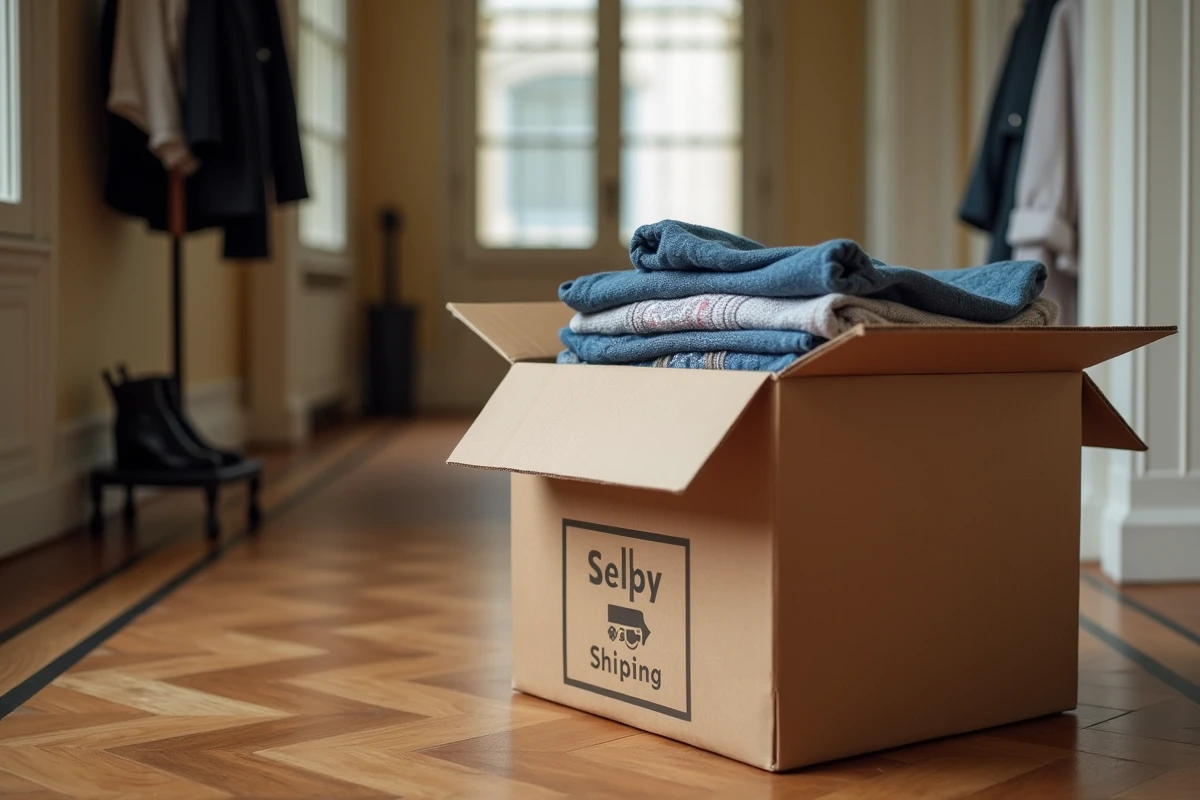
The model is based on a simple principle. You fill a bag with your clothes, accessories, or items. Sellpy receives it in their warehouse, sorts the contents, photographs what is selected, and puts it up for sale on the platform.
Since late 2023, user feedback from Germany and Sweden has reported a notable increase in rejected items due to deemed insufficient quality. Items that were once accepted no longer pass the sorting. Sellpy now prioritizes sought-after brands and items in very good or excellent condition.
In practical terms, this means that a larger portion of your bag will be donated or recycled rather than sold. The sentiment shared by several sellers revolves around a lack of transparency regarding acceptance criteria. You do not know in advance which items will be accepted, and the platform does not provide a precise grid.
We have published a detailed review of Sellpy France that delves into this point, particularly the difference between marketing discourse and the actual experience of sellers.
Processing times Sellpy France: what to expect
Have you noticed that the estimated time displayed when ordering the bag does not always match reality? This is one of the most common friction points.
In Scandinavian and German user communities, several testimonials in 2024 report a significant lengthening of the time between sending the bag and the online listing of items. What used to take a few weeks can now stretch well beyond.
Sellpy does not communicate granularly about the load in its warehouses. When a surge of bags arrives (after holidays, at the beginning of spring), processing slows down mechanically. The seller has no visibility on the waiting list.
Once the items are online, the sale itself depends on demand. Premium brand items sell quickly. Fast-fashion or less sought-after brand items linger for a long time, then see their prices automatically drop until the last chance before donation or recycling.
Returns and claims: the concrete framework for the buyer
On the purchasing side, Sellpy offers a 30-day return policy provided that the identification tag is intact and the item is in the same condition. Return shipping costs amount to 5.99 euros, at the buyer’s expense.
Here’s the process in case of a problem:
- You submit a claim from your order page on your Sellpy profile. There is no hidden form, but you must follow the instructions item by item.
- Sellpy announces a response within one to two business days. Do not return the item before receiving their response, or you risk losing the tracking.
- Refunds are processed within 14 days of receipt in the warehouse, then completed within three additional days.
This framework remains acceptable for online second-hand. The main constraint: the return cost, which can represent a significant portion of a low-priced purchase.
Sellpy profitability for the seller: the realistic calculation

The platform takes a commission on each sale. The seller can choose to receive their earnings via bank transfer or convert them into Sellpy credits, which offer an additional bonus.
Why does this choice matter? Because Sellpy credits lock you into the ecosystem. If you do not plan to make purchases on the platform, the bonus has no value for you. It is better to opt for the bank transfer even if the amount is lower.
The real issue of profitability does not lie in the commission itself, but in the conversion rate of your bag. If out of twenty items sent, seven are rejected and five remain unsold for several months, your actual return drops. Before sending a bag, a simple question helps calibrate your expectations: how many of these pieces would you buy online for more than ten euros?
Sellpy and H&M Group: a link that influences strategy
Sellpy belongs to the H&M Group. This partnership gives it access to industrial logistics and significant visibility. In return, Sellpy’s strategy follows the group’s directions, which now prioritizes profitability by country rather than growth at all costs.
For the French seller, this translates into discreet adjustments: stricter sorting criteria, emphasis on high-margin items, and potentially the closure of markets deemed unprofitable. This capital link is rarely mentioned in Francophone content, yet it directly conditions the evolution of the service.
- The sorting policy can change without notice, depending on the group’s profitability objectives.
- Investments in the seller experience depend on the performance of the French market compared to other European countries.
- A less profitable market may see its service degraded (longer processing times, fewer promotions) before potentially being closed.
Sellpy remains a functional service for effortlessly selling brand clothes in good condition. For common items, the current rejection rate and processing times make profitability uncertain. Testing with a first bag composed solely of pieces you consider sellable for over fifteen euros gives a reliable picture of what the platform can actually yield for you.