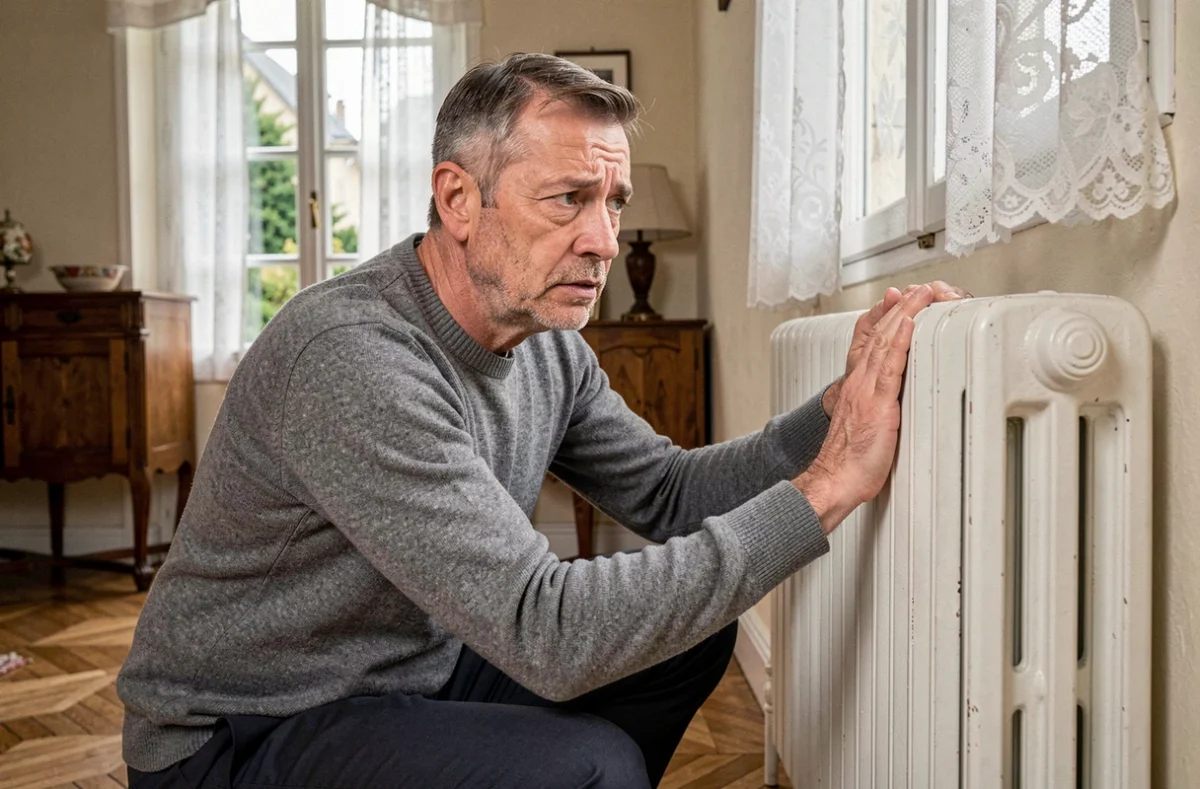
A scorching-hot radiator upstairs and a lukewarm one on the ground floor, on the same circuit: this problem affects a large number of detached homes and apartment buildings with hot-water central heating.
Water follows the path of least hydraulic resistance, supplying the radiators closest to the boiler or circulator first, leaving the ground-floor radiators with too little flow. Before replacing anything, you can address three specific factors: bleeding, the lockshield valve and, in some cases, the distribution network itself.
Shared risers or a faulty radiator: the diagnosis that makes all the difference in a condominium
In a detached home, the entire circuit is yours. In an apartment building, things are different. A cold ground-floor radiator may point to an imbalance in the shared risers, not just a problem in your apartment.
To find out, start with a simple test: if several apartments on the same floor have cold radiators while the upper floors heat normally, the problem is probably in the shared distribution network. In that case, the property manager must appoint a heating engineer to inspect the shared system before each co-owner makes repeated individual adjustments to no avail.
Regulations clearly distinguish between heat distribution networks (common areas) and privately owned equipment. Tenants and co-owners should not work on a riser. If, however, only one ground-floor apartment is affected, the fault is often limited to a stuck valve, localized sludge buildup or an incorrectly positioned lockshield valve.
So, to balance a cold radiator downstairs, first determine whether the issue needs to be addressed at the apartment or building level.
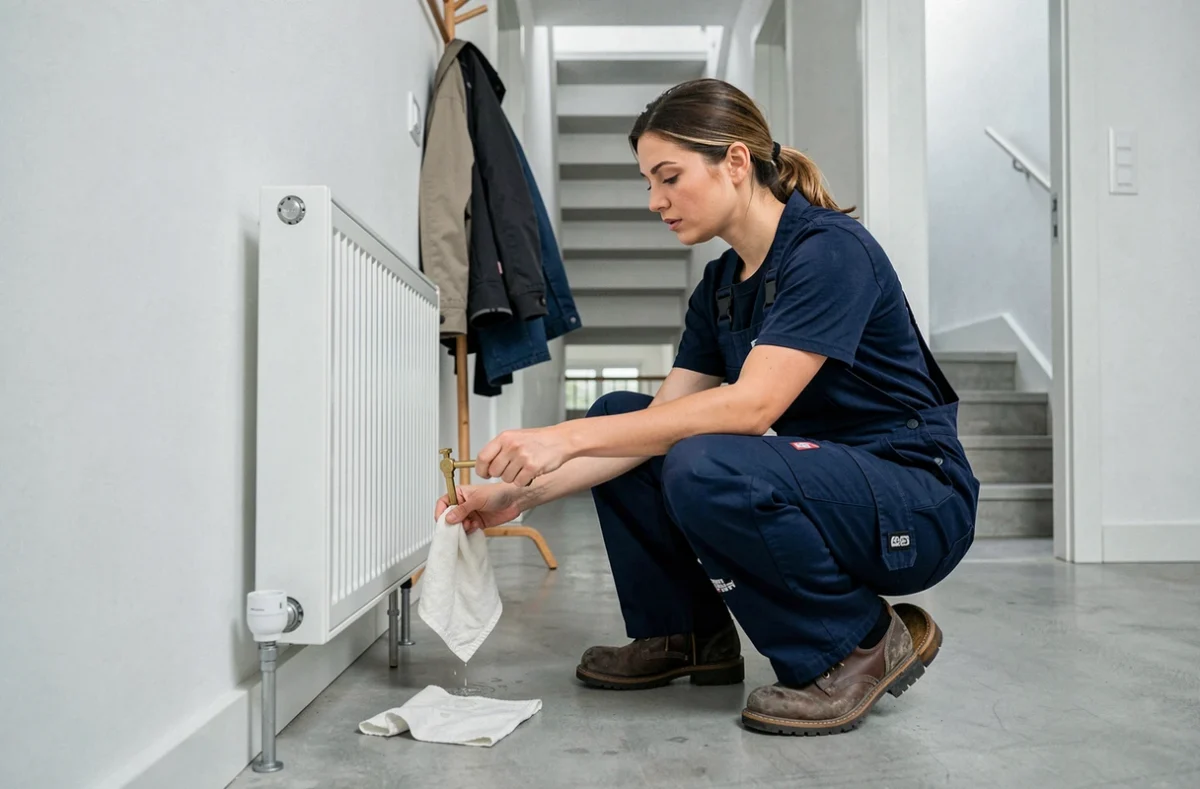
Bleeding, pressure and sludge buildup: rule out the usual suspects before balancing
Hydraulic imbalance is often blamed, but three more common causes should be ruled out first. They can be fixed without touching the lockshield valves and each takes just a few minutes.
Bleeding ground-floor radiators
Air trapped in a radiator blocks the flow of hot water. Check by running your hand over it: a radiator that is hot at the bottom and cold at the top contains air. Bleed it with the heating valve open, turning the bleed screw until a steady stream of water replaces the sputtering air.
After bleeding each radiator, check the boiler pressure on the gauge. When cold, it should be between 1 and 1.5 bar. If the pressure regularly drops after bleeding, a small leak or a faulty expansion vessel may be to blame.
Sludge buildup: radiator cold at the bottom, hot at the top
The opposite symptom (hot at the top, cold at the bottom) points to sludge deposits in the lower part of the radiator. Bleeding it will not help. Only chemical or hydrodynamic power flushing can restore circulation through clogged radiators. In an older system that has never been treated, this is the first possibility to consider on the ground floor, where sludge tends to settle under gravity.
Hydraulic balancing with the lockshield valve: a practical method for the ground floor
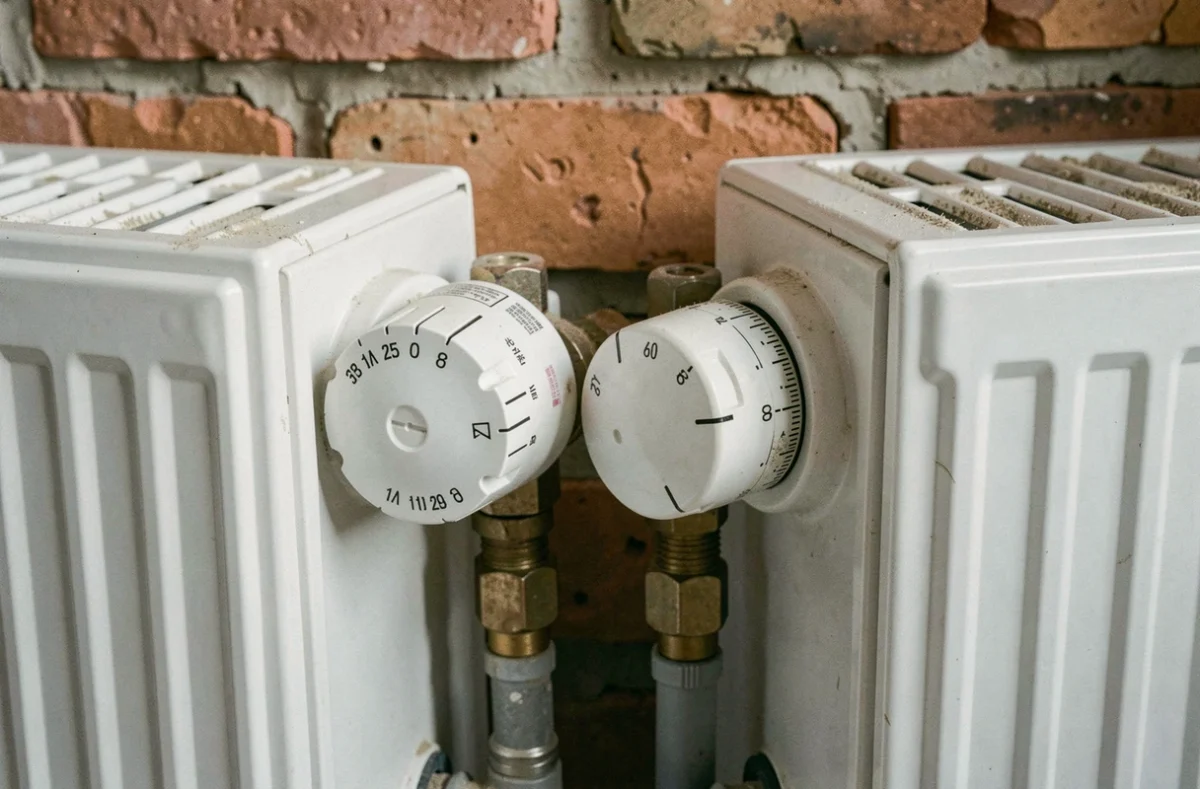
If the radiators have been bled and the pressure is correct, but the downstairs radiators are still lukewarm, it is time to balance the system. The principle is simple: reduce the flow to radiators that heat up too quickly (often those upstairs, close to the circulator) to redirect water to the ground-floor radiators.
- Turn off the boiler, fully open all the lockshield valves throughout the circuit, then turn the boiler back on.
- Note the order in which the radiators warm up: the first to heat up are receiving the most flow.
- Gradually close the lockshield valves on the radiators that heat up first (half a turn at a time), then wait about 20 minutes to see how the flow is redistributed.
- Aim for a temperature difference of around 12 °C between the flow and return pipes on each radiator, measured with a contact thermometer.
This takes patience: every adjustment affects the entire circuit. Expect to go back and forth between the radiators two or three times before achieving a stable balance.
CEE measure BAR-SE-104: when balancing becomes a regulated procedure
Hydraulic balancing is more than a troubleshooting measure. The French BAR-SE-104 measure under the energy savings certificates scheme covers the adjustment of balancing valves in a hot-water heating system. In practice, this means a professional can carry out the work under a scheme that may qualify for financial assistance, provided the work is documented in accordance with the requirements of the current measure.
This is useful in two situations. After a renovation or boiler replacement, you can ask the installer whether the system was balanced and the work documented. Balancing documented in accordance with measure BAR-SE-104 is different from a simple adjustment based on guesswork. Whether the system is new or existing, this check helps prevent cold radiators during the first winter.
Balancing and room-by-room control: two different functions
Controls (thermostatic radiator valves, smart thermostats) adjust each room’s temperature by regulating the radiator valve opening. Balancing works upstream: it distributes the water flow throughout the circuit so that each radiator receives the intended amount of water. One cannot make up for the absence of the other.
A thermostatic valve cannot fix a radiator that receives almost no water, and even a perfectly balanced system still needs local controls to adjust the temperature to suit how each room is used.
If the ground-floor radiators remain cold even with the thermostatic valves fully open, the problem is a lack of balancing, not a control issue. Checking the circulator and lockshield valves is the most direct approach before considering more costly investments.