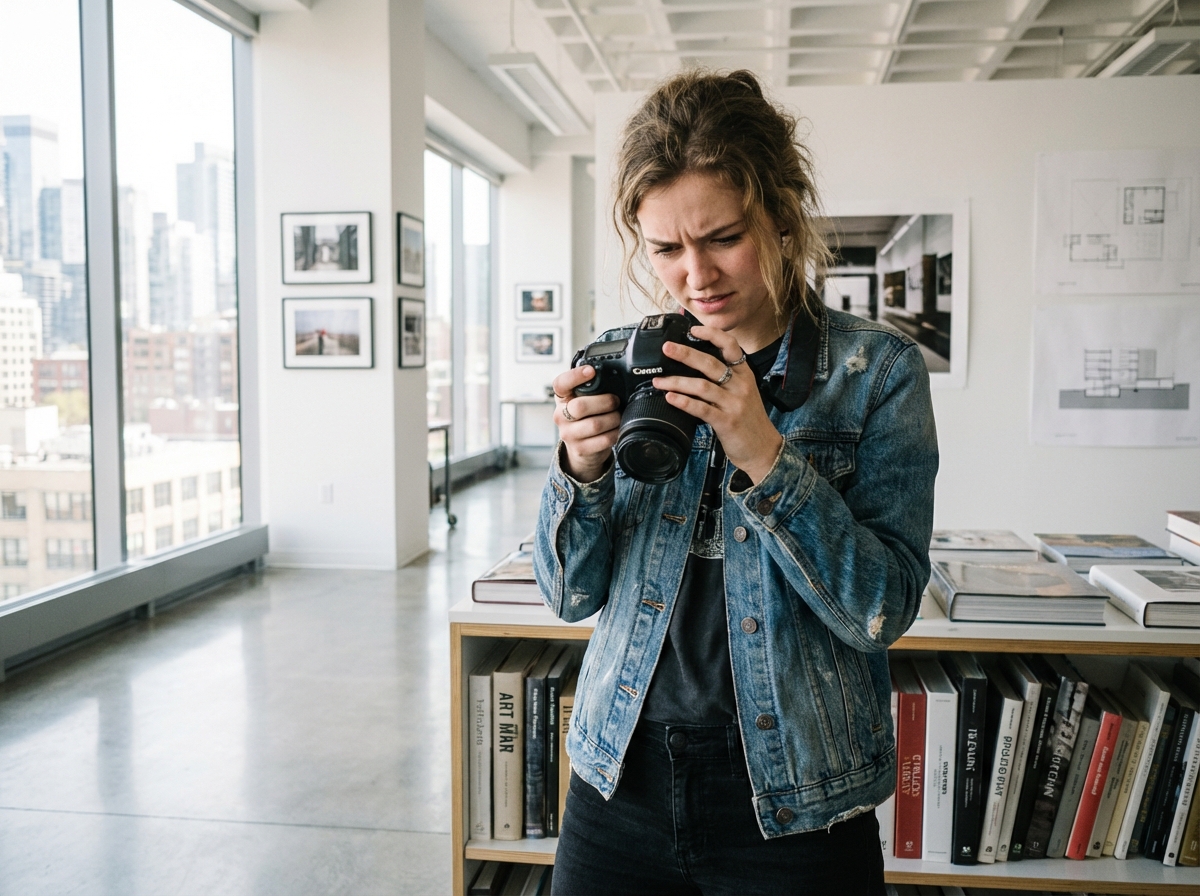
No official figures measure the proportion of self-taught photographers, but few succeed without dedicated training or a network. However, there is no royal road: each path is forged between traditional courses, internships, and on-the-ground learning.
The landscape of courses stretches from CAP to master’s degree, multiplying opportunities for those dreaming of entering photography. Whether aiming for quick integration or acquiring advanced skills, the diversity of training requires close attention to the sector’s developments. An appetite for technical novelties, curiosity, and adaptability remain significant allies in keeping pace with the profession’s frantic rhythm.
Overview of career opportunities: what jobs are available for photography enthusiasts?
Professional photography is practiced in a multitude of forms, through various statuses. One can choose independence as a freelance photographer, author, or artisan, or prefer to lead a team as an employee. The sector opens up to a multitude of specializations: photojournalism, wedding, fashion, portrait, landscape, industrial photography, or commercial assignments. Each orientation corresponds to specific expectations, codes to assimilate, and a clientele to convince: businesses, media, agencies, individuals.
Before diving in, one must also choose a legal status, which will shape the way of working daily. Micro-enterprise, company, sole proprietorship, author status, or employee: each option comes with distinct rules regarding income management, social contributions, or copyright management. Salary discrepancies can be considerable from one specialty to another, from wedding photographers to those collaborating with companies or doing reports for the press. Everything hinges on the ability to retain clients, the strength of one’s network, and the relevance of one’s positioning.
In this highly competitive environment, specializing often becomes a decisive asset. Some root themselves in a niche, while others prefer versatility to multiply assignments. Courses, like the BTS Photography, provide access to technical and artistic foundations, without neglecting aspects of management, communication, and marketing.
Entering and enduring in professional photography requires mastering the technical aspect, but also understanding the economic mechanisms of the sector. Knowing how to set one’s rates, negotiate, protect one’s rights, respond to varied requests, and evolve with media and distribution channels. The balance lies between know-how, artistic sense, entrepreneurial spirit, and the ability to forge lasting connections with influencers and clients.
Overview of photography training: courses, specializations, and alternatives
The choice of photography training often determines the first step toward professional life. Two main axes emerge: initial training for high school students or young adults, and continuing education for those wishing to retrain or enhance their skills. The Bac Pro Photography and BTS Photography programs remain classics, blending theory, practical workshops, and immersion in companies. These diplomas lead to jobs in studios, laboratories, retouching, reporting, or managing visual projects.
There are also specialized schools, academies, or institutes that offer longer cycles, sometimes culminating in a degree in visual arts or a certificate in photography. Some programs emphasize technical perfection, while others explore visual writing, storytelling through images, or project management in photography. Meanwhile, continuing education is increasingly attracting professionals eager to update their skill set. Workshops, short courses, remote modules: formats are multiplying, often fundable through CPF, PTP, AIF, or France Travail schemes.
Self-training also has its place, whether through studio internships, author workshops, or individual support to refine one’s style, prepare for a career change, or explore new practices.
| Type of training | Audience | Degrees/Certificates |
|---|---|---|
| Initial (Bac Pro, BTS) | Young people, students | Bac Pro Photography, BTS Photography |
| Continuing (workshops, CPF, remote) | Adults, career changers | Certificate, attestation, specialization |

How to choose your training and connect with the right institutions?
To choose your photography training wisely, it is essential to adopt a methodical approach and clarify your project. Before enrolling, precisely identify your aspirations, the sector you are targeting, and the skills you wish to develop: technical, creativity, mastery of light or composition, advanced use of photo editing software like Photoshop or Lightroom. The most robust courses do not limit themselves to technique: they include project management, post-production, and the creation of a quality portfolio.
To find the right training, inquire about the pedagogy of the institutions: course content, instructors’ experience, access to equipment, emphasis on practice and professional immersion. It is wise to attend open days or participate in webinars to interact with the teaching staff, understand the school’s philosophy, and the level of support offered.
Here are some guidelines for effectively comparing offers and facilitating your choice:
- Analyze the programs and compare them with the realities of the job market.
- Check the value of the degrees or certificates obtained.
- Be aware of available financing solutions, whether through CPF, PTP, AIF, or France Travail schemes.
Consider contacting former students, gathering their testimonials, and studying their achievements. Upload a portfolio as soon as possible: it is often the first gateway to employers and clients. Build your professional network through social media, exhibitions, or photographer workshops. Taking initiative, exposing your images to others’ views, and continuously training opens the door to a vibrant career built on solid foundations and a passion for learning that is always renewed.