Shock chlorine oxidizes organic matter, while the clarifier aggregates suspended colloidal particles. These two mechanisms are complementary on paper, but their simultaneous use in the pool poses a problem of chemical sequencing that most consumer guides overlook.
Interaction between shock chlorine and clarifier: what happens at the molecular level
Shock chlorine, whether based on calcium hypochlorite or sodium dichloroisocyanurate, releases a massive amount of hypochlorous acid. This active form of chlorine attacks chloramines, algae, and organic residues present in the water. The clarifier, on the other hand, works as a cationic polymer: it neutralizes the electrical charges of microparticles to group them into clumps large enough to be captured by the filter.
The problem arises when these two products are introduced simultaneously. The oxidizing power of shock chlorine can degrade the polymer of the clarifier before it has had time to act on the particles. We regularly observe pools where the owner has added clarifier and shock chlorine within the same hour, with no visible result on turbidity, precisely because the clarifier has been chemically neutralized.
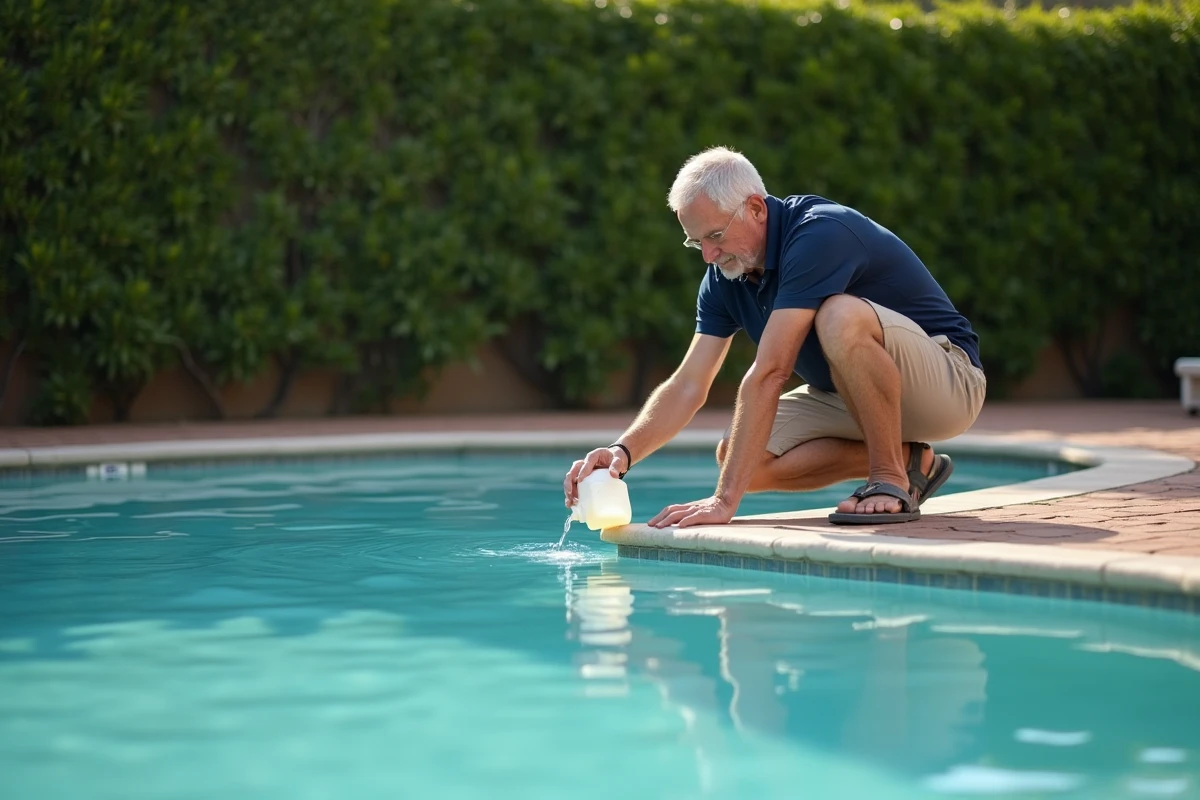
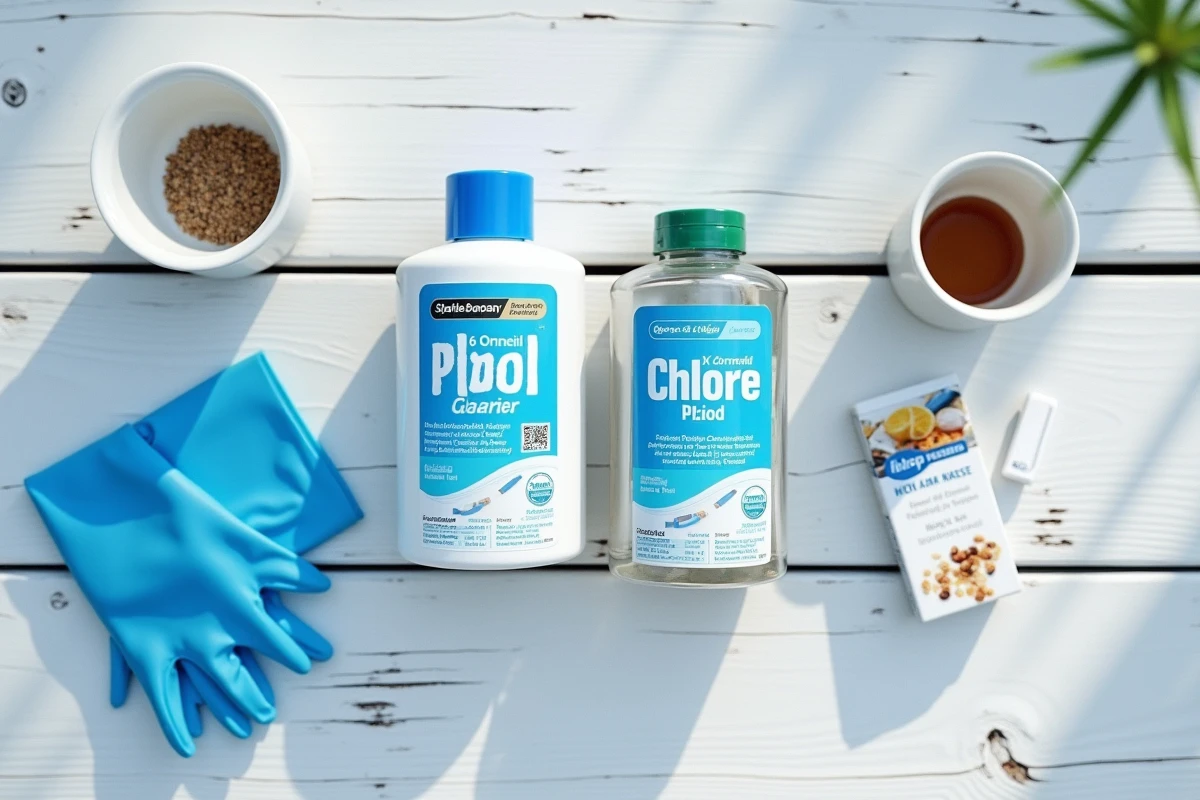
A point that should never be overlooked: never physically mix these products in the same bucket or doser. Direct contact between shock chlorine and clarifier can cause violent chemical reactions, with potentially toxic gas release and a risk of damaging the pool’s surface.
For those who wish to use clarifier with shock chlorine in a combined treatment approach, the right strategy is to use them in the same treatment sequence, but separated by a sufficient delay.
Sequencing shock treatment and pool clarifier: the protocol to follow
We recommend a three-step protocol that avoids any interference between the two products.
Step 1: adjust the pH first
This is the prerequisite that many overlook. A pH above 7.8 significantly reduces the oxidizing power of shock chlorine, making the entire treatment ineffective. The clarifier will never compensate for chlorine that is not oxidizing properly. Before adding anything, test the pH and bring it back to the range of 7.0-7.4.
Step 2: shock chlorine with continuous filtration
Add shock chlorine preferably at the end of the day to limit degradation by UV. Keep the filtration running continuously. Wait for the free chlorine level to drop below a few mg/l before moving on to the next step. This delay varies depending on the pool volume and sunlight exposure, but generally expect at least a full night.
Step 3: clarifier once the chlorine is stabilized
Introduce the clarifier only when the chlorine has completed its oxidation work and its level has decreased. The polymer can then act without being destroyed, and the clumps of particles will be captured by the filter. Maintain continuous filtration during the following hours.
- Test and correct the pH first, before any introduction of chemical products into the pool
- Apply shock chlorine and let the filtration run until the chlorine level drops
- Introduce the clarifier only after the chlorine has decreased, never simultaneously
- Never pre-mix the products outside the pool, even in small quantities
Pool clarifier and filter type: a compatibility to check
Not all filtration systems tolerate clarifier in the same way, and this is a factor that general articles rarely address directly.
The clarifier is suitable for sand filters, which have sufficient retention capacity to trap clumps of aggregated particles without rapid clogging. In contrast, on a cartridge filter or a filter with filter balls, the clarifier clogs the filter media within a few hours. The result is paradoxical: instead of clearer water, you get rising pressure, decreasing flow, and a filter that needs to be cleaned or replaced prematurely.
For pools equipped with cartridge filters, we recommend not using clarifier at all after shock chlorine. A good pH adjustment combined with shock treatment is usually sufficient to achieve clear water, provided that the filtration runs long enough and the cartridge is cleaned midway.
Cloudy water after shock chlorine: when clarifier is not the solution
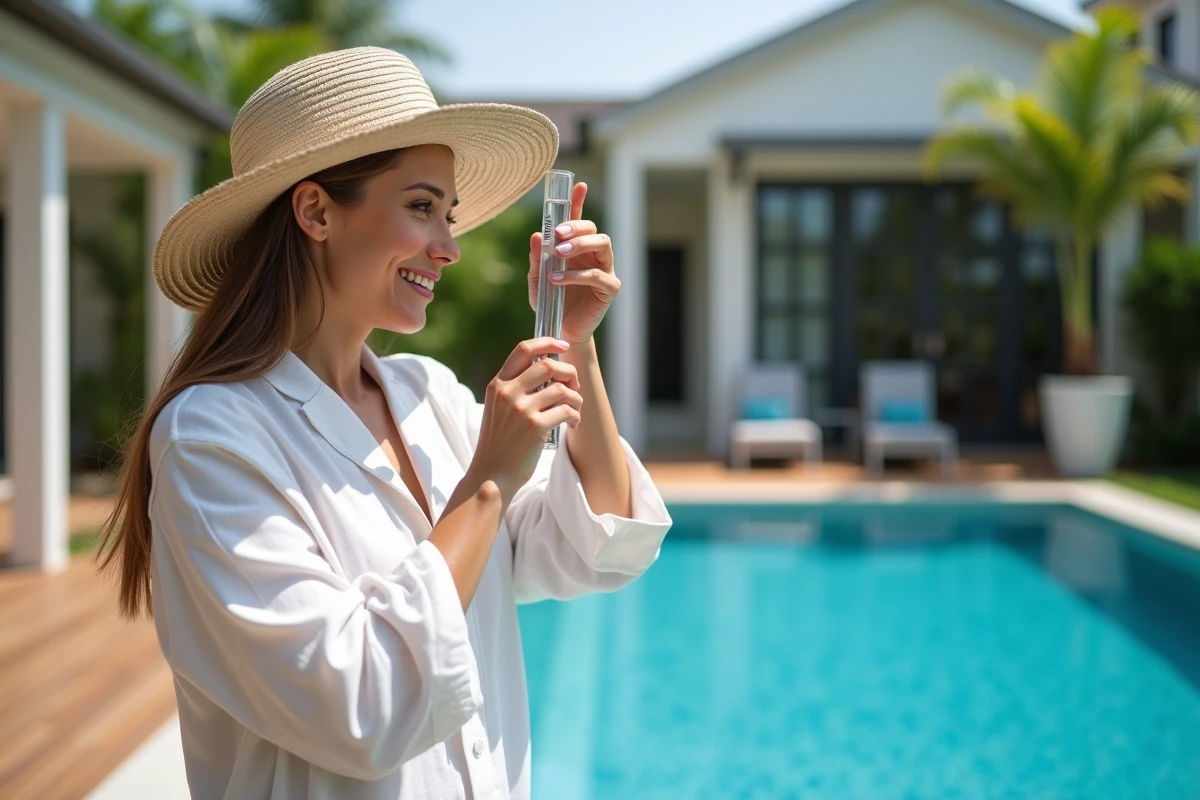
Cloudy water after shock chlorine does not automatically mean that clarifier needs to be added. Several causes require a different diagnosis.
- A pH that has drifted above 7.8 after the shock, which cancels the oxidizing effect and keeps particles suspended
- A clogged or undersized filter, unable to capture even aggregated residues
- An excessively high stabilizer concentration (cyanuric acid), which blocks the action of free chlorine and makes any additional addition unnecessary
The clarifier does not correct either a pH problem or an excess of stabilizer. Adding it under these conditions amounts to layering a product over a fundamental chemical dysfunction. We regularly see owners multiplying doses of clarifier on persistently cloudy water, when the real lever was simply adjusting the pH or backwashing the filter.
In a properly balanced pool with a clean sand filter, the duo of shock chlorine followed by clarifier (in that order, with a gap of several hours) yields visible results within two days. If turbidity persists beyond that, the problem lies upstream of the chemical treatment, not in the choice of products.